Jot, a handheld voice-note device
Hold the button and speak. Jot saves the recording to its own flash, sends it to your iPhone over Bluetooth, and the app files it as a note, a task, a reminder or an event.
The app works today, on the phone's own microphone, and a breadboard prototype already streams a recording into it. The custom board, Rev A, is laid out on four layers and goes to fab once Raytac, who make the radio module, have checked the antenna.
Now: PCB + fab. Updated 6 Nov 2026.
How it works
Press
Hold the button and speak. Release to finish the note.
Save
Jot writes the clip to its own flash first, so a recording never waits for a connection.
Send
Over Bluetooth Low Energy to the iPhone, whenever the phone is in range.
File
The phone transcribes it, Apple's on-device model decides what it is, and it lands as a note, a reminder or a calendar event.
The board
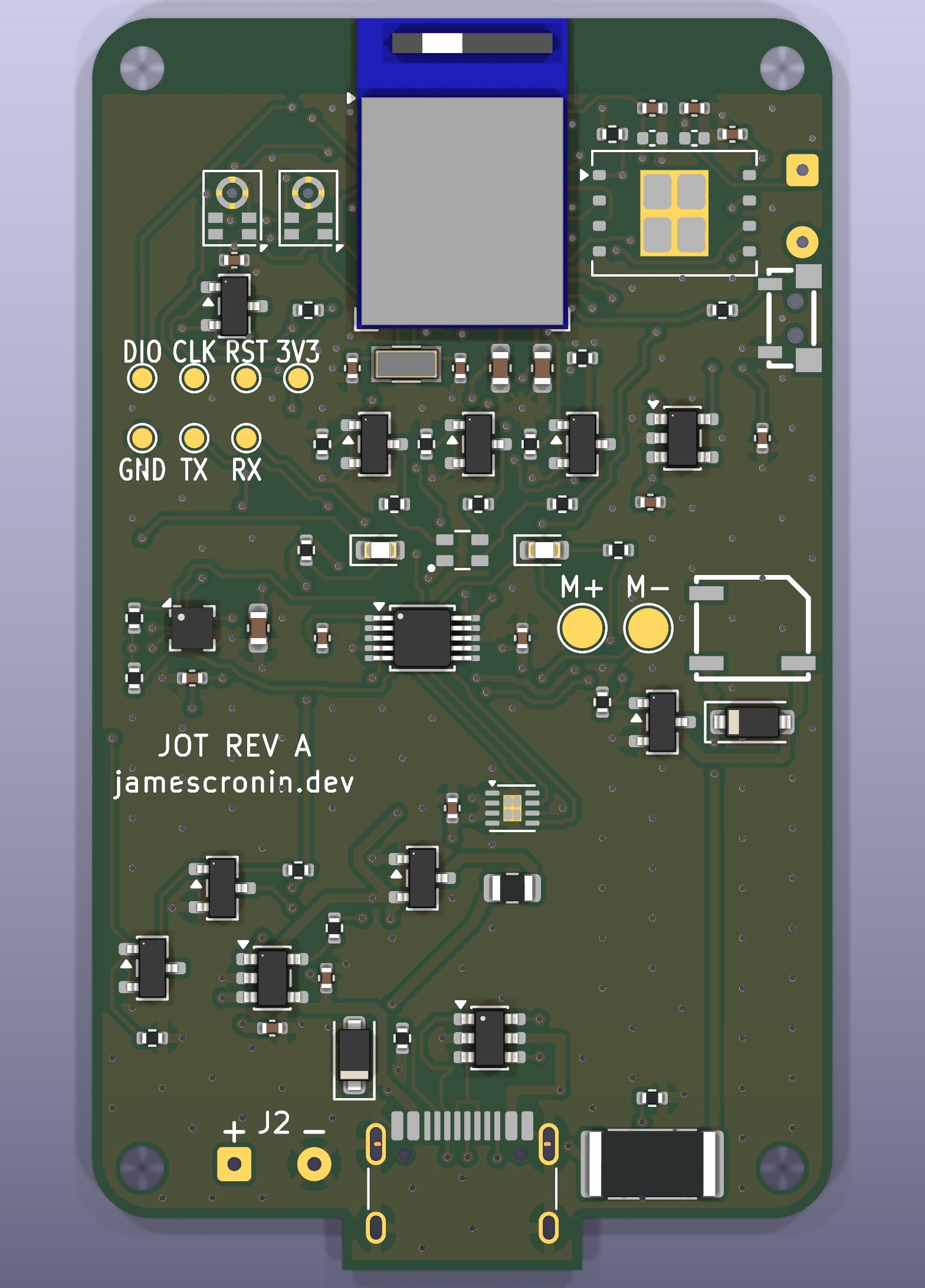
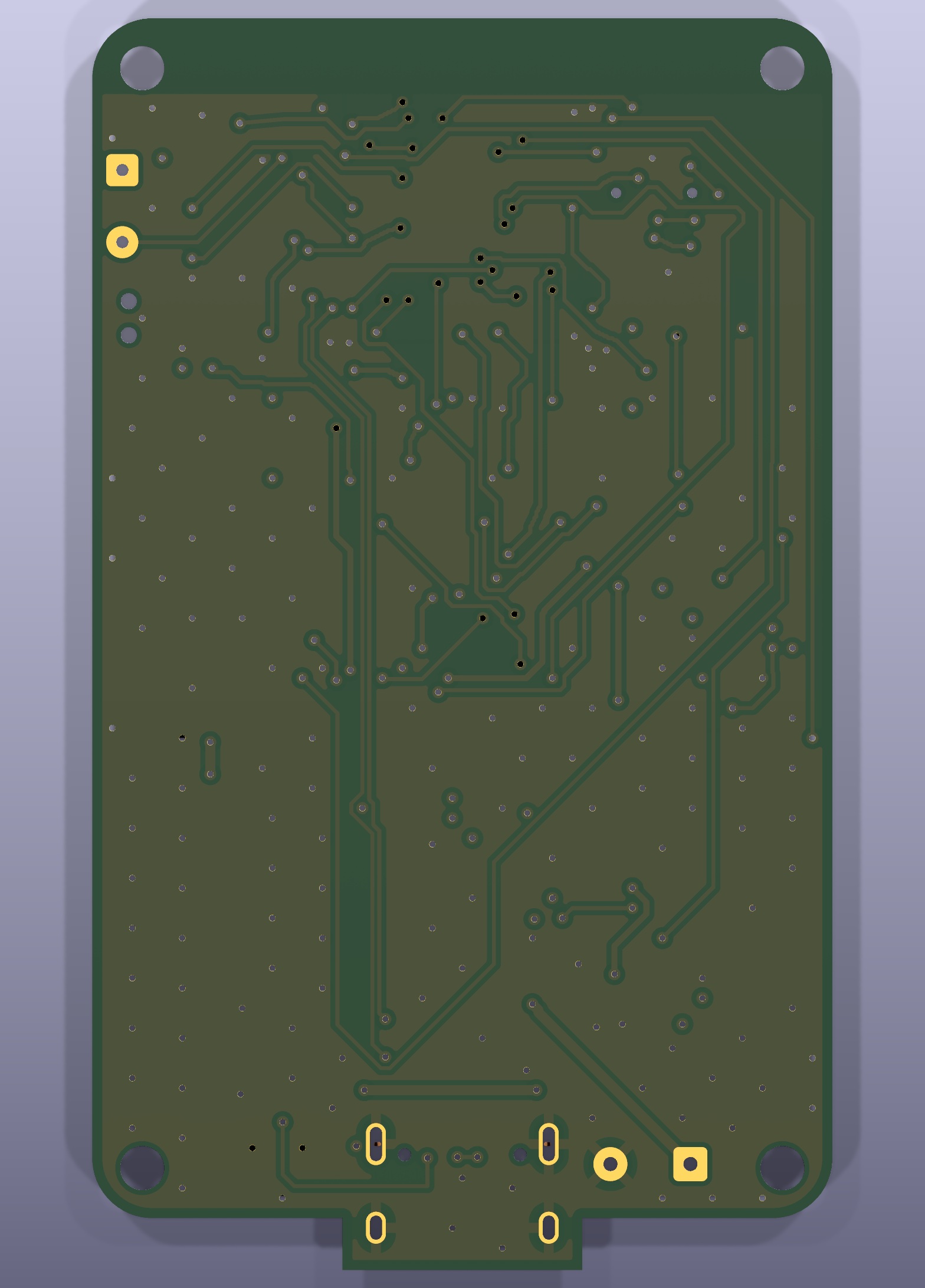
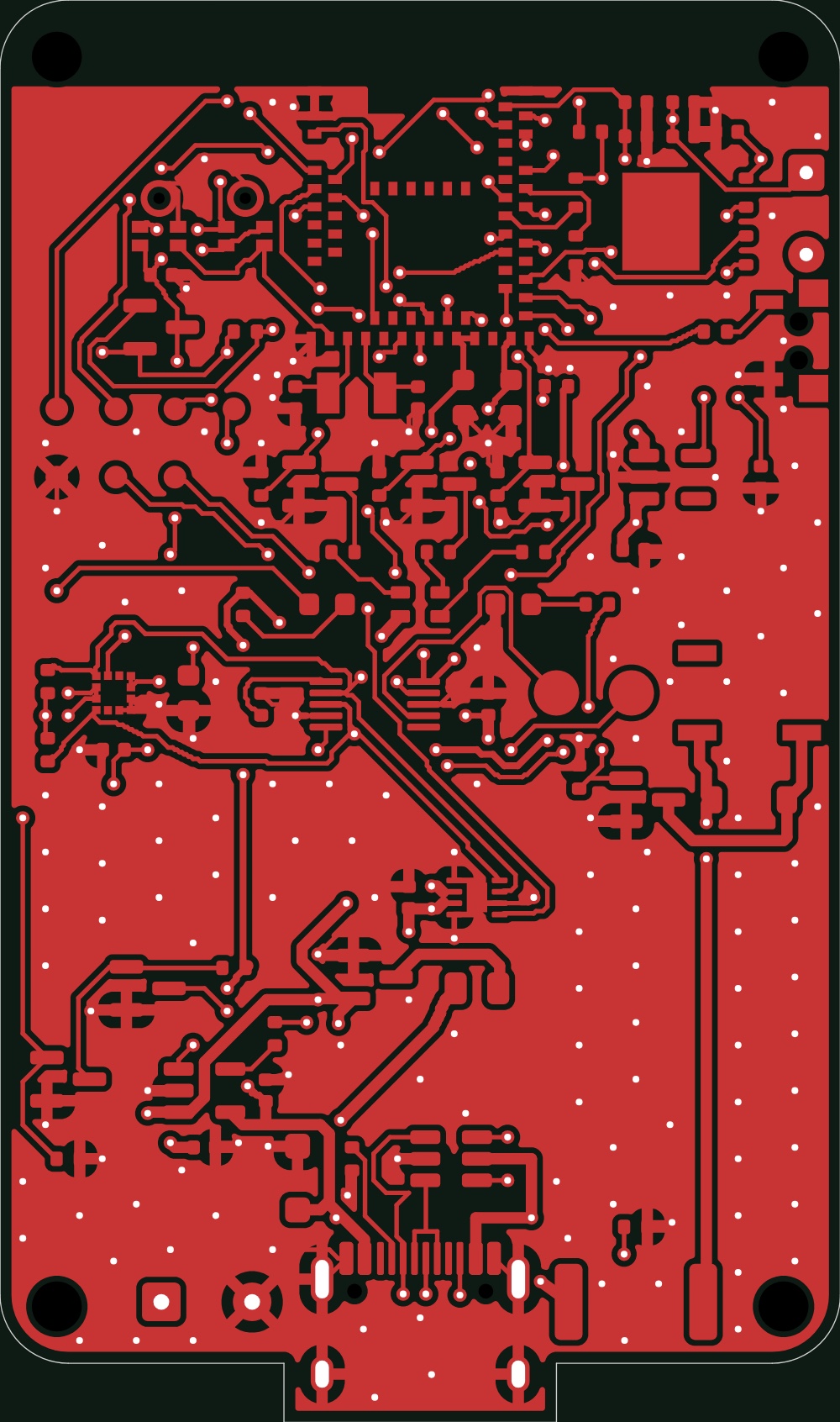
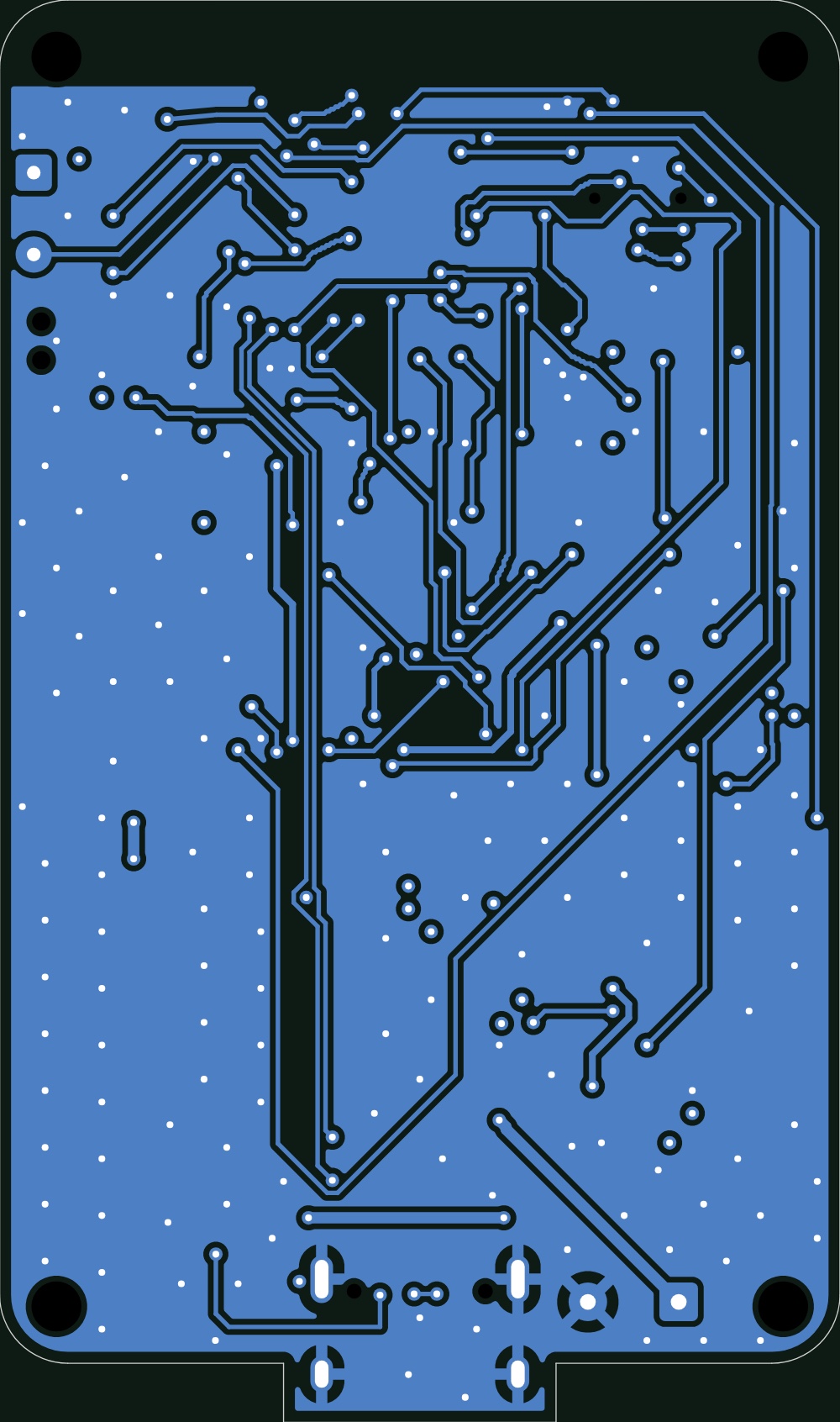
Rev A: 37 by 60 mm, four layers, 1.0 mm thick, every part on the top side so the battery can sit underneath. Layer 2 is a solid ground plane and layer 3 carries 3.3 V and battery power. The radio module sits on ground on every layer with a clear antenna strip across the top edge.
The schematic is nine KiCad sheets, through two independent design reviews and a fault-by-fault pass that added battery and USB protection. The layout has been through its own review: the design-rule check is clean and the board matches the schematic. JLCPCB can assemble every part.
Read the Rev A notes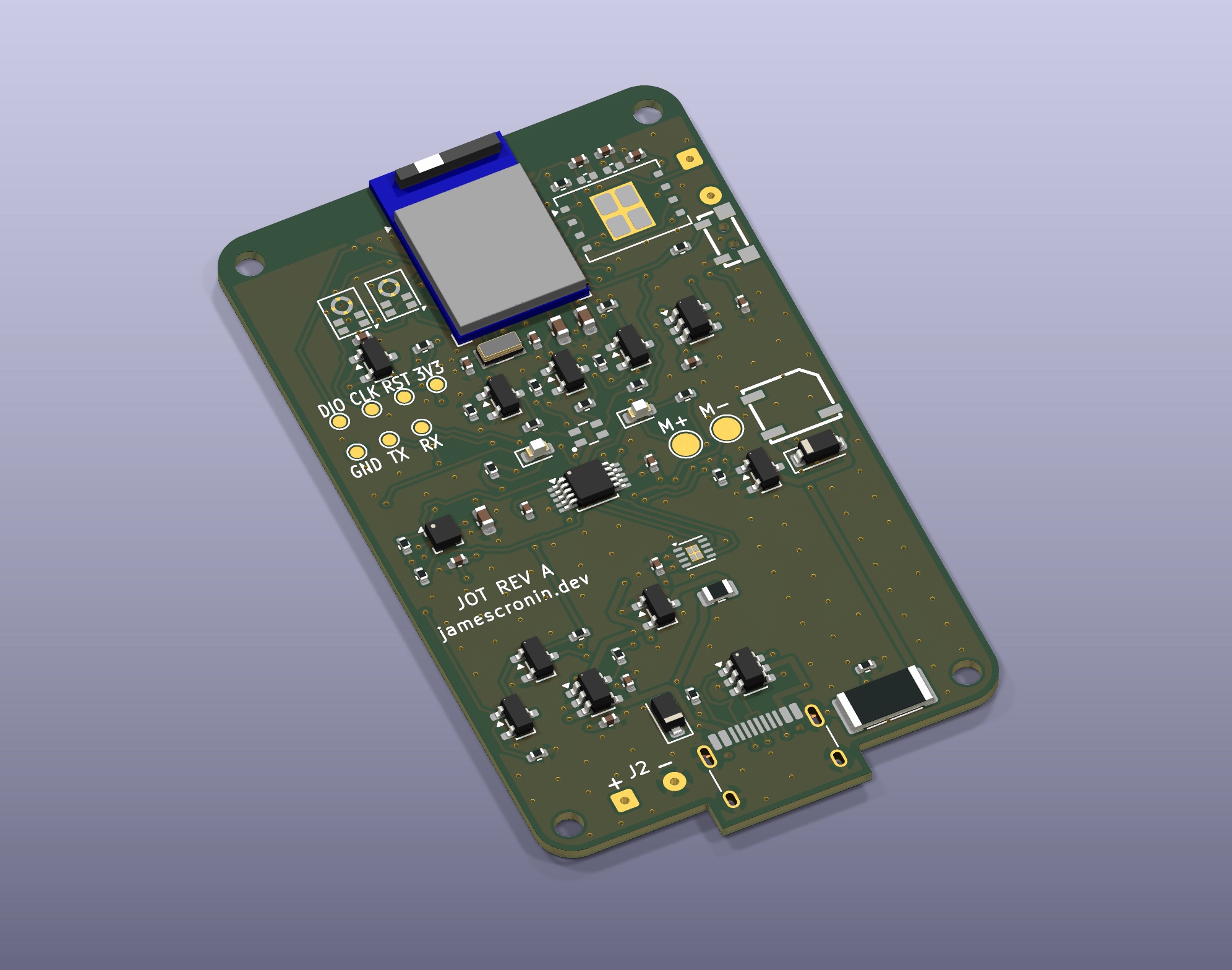
Mistakes I caught before ordering
Ten things found in two design reviews and a fault-by-fault pass, before any board was made. Each would have meant a second revision.
Datasheet review
Flash chip-select on the reset pin
P0.18 doubles as the nRF52840's reset. The flash moved to the pins Nordic's own kit uses.
Schematic check
5 V on a 3.6 V flash
Its supply was wired straight to USB power, which would have killed it the first time USB went in. It now runs from the 3.3 V rail.
Schematic check
Two QSPI data lines swapped
IO0 and IO2 were crossed between the flash and the MCU. In quad mode every byte would come back scrambled.
Assembly check
A charger too small to assemble
The first charger was a 0.4 mm-pitch ball-grid chip, finer than JLCPCB's economy line can place and impossible to rework by hand. Swapped for a SOT-23 part before footprints.
Architecture
A clock line that powers a switched-off mic
The mic rail switches off when idle, but a driven PDM clock would feed it through its pins. Firmware releases that pin first.
Fault review
No fuse below the battery's own cut-off
The pack only protects itself above 2 to 5 A. A resettable fuse (0.5 A hold, 1 A trip) and a reverse-battery switch now sit at the battery input.
Layout review
A battery connector taller than the case
The JST header stands 5.5 mm off the board, which would have ended 0.8 mm outside the 12.8 mm case. The battery leads now solder into two marked holes and take no height.
Layout review
Vias drilled through solder pads
Seven vias sat inside pads, where an open hole can drain solder from the joint. Each moved beside its pad, and the LED pins were re-ordered so their lines no longer had to cross.
Fault review
I2C pull-ups too weak for the fuel gauge
The gauge alone can add 60 pF and needs a 300 ns rise. 4.7 kΩ left about 15 pF of margin for everything else; 2.2 kΩ leaves 100 pF.
Cost review
A $36 flash chip
128 MB was four times what Jot needs between syncs. A 32 MB part in the same package costs $4.34: about $160 saved on the first five boards.
Proved on a breadboard
Before the custom board, the whole loop ran on parts you can buy: an nRF52840 board, a battery and a button. Hold it, speak, let go, and the words land in the app, sorted. It uses the same chip family as Rev A, so the firmware and the app's Bluetooth code carry straight over.
Plan for lost packets
Sent flat out, about half the packets never arrived. Confirming each one was reliable but slow. Numbering them and asking again for only the gaps is both fast and lossless.
Stream while recording
Sending while the button is still held leaves only a fraction of a second of audio to send when you let go: about 60 ms.
The library matters as much as the chip
The first Bluetooth stack silently dropped packets and connections. Bluefruit waits for a free buffer instead, and the link became fast and stable.
The app came first
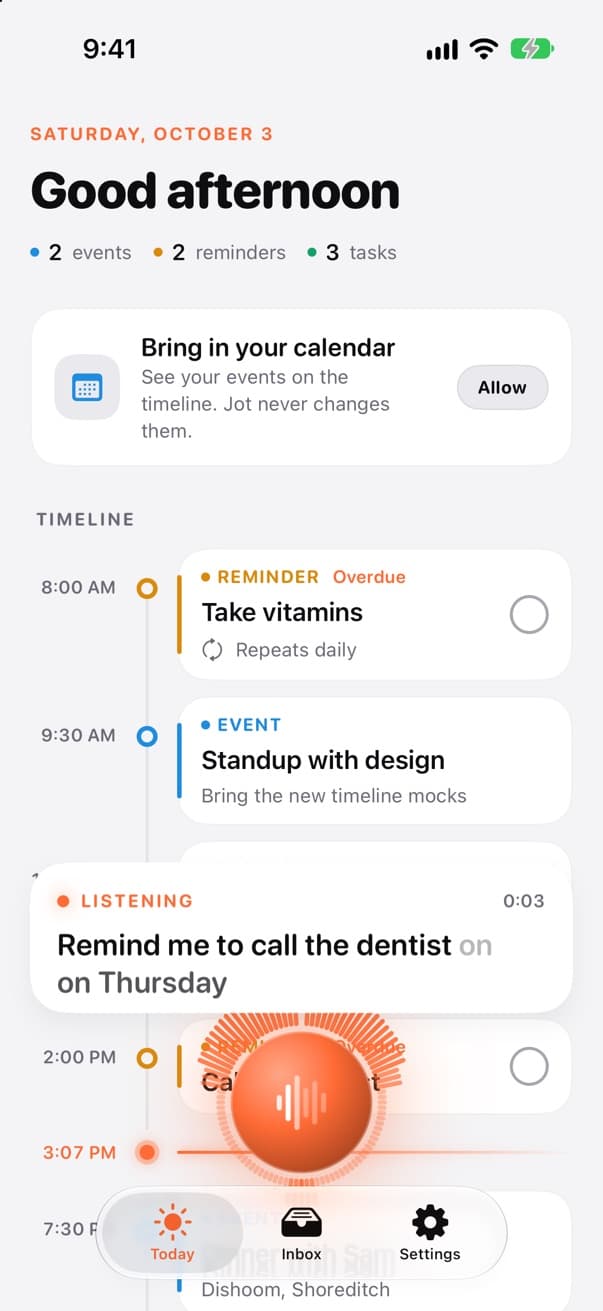
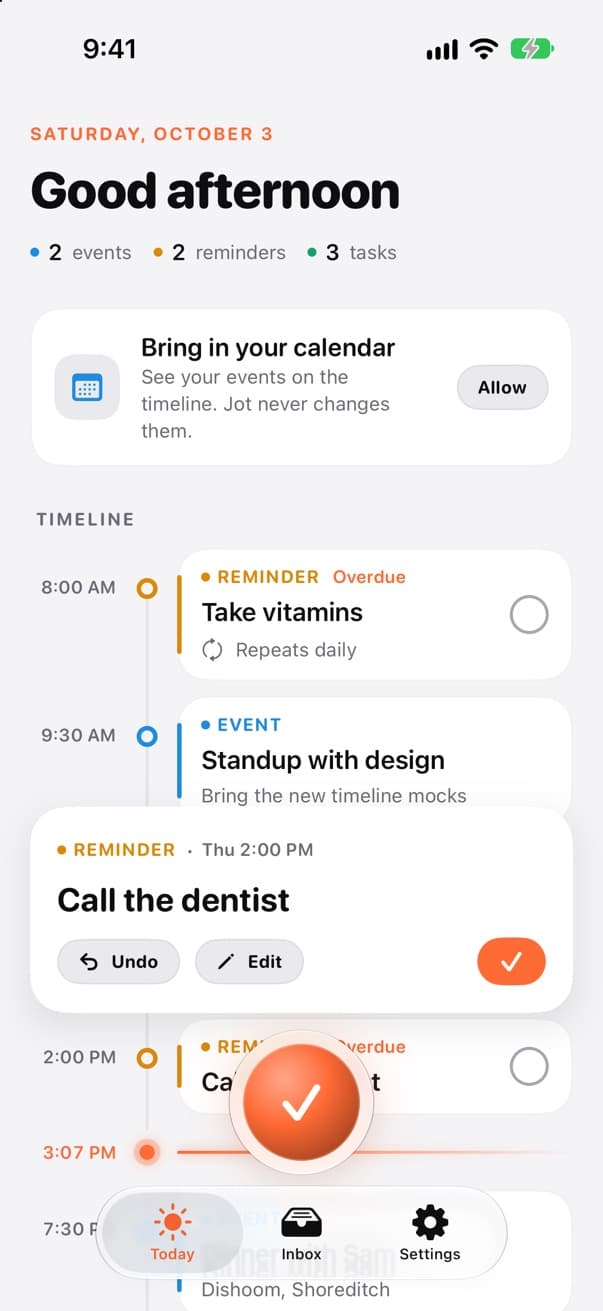
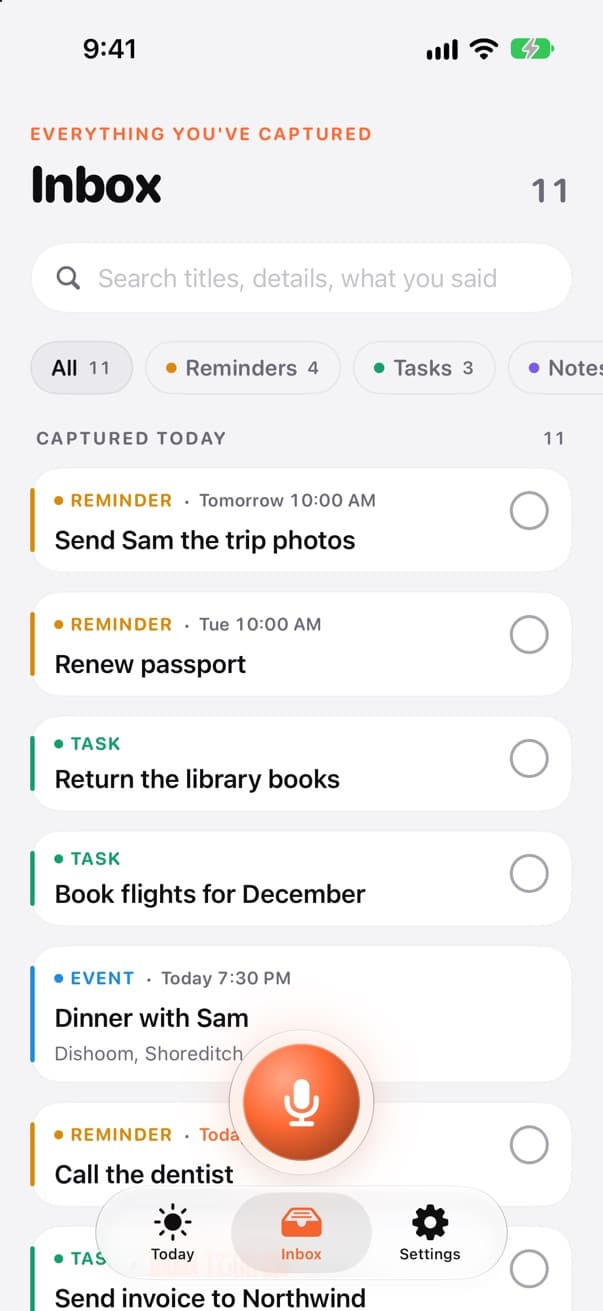
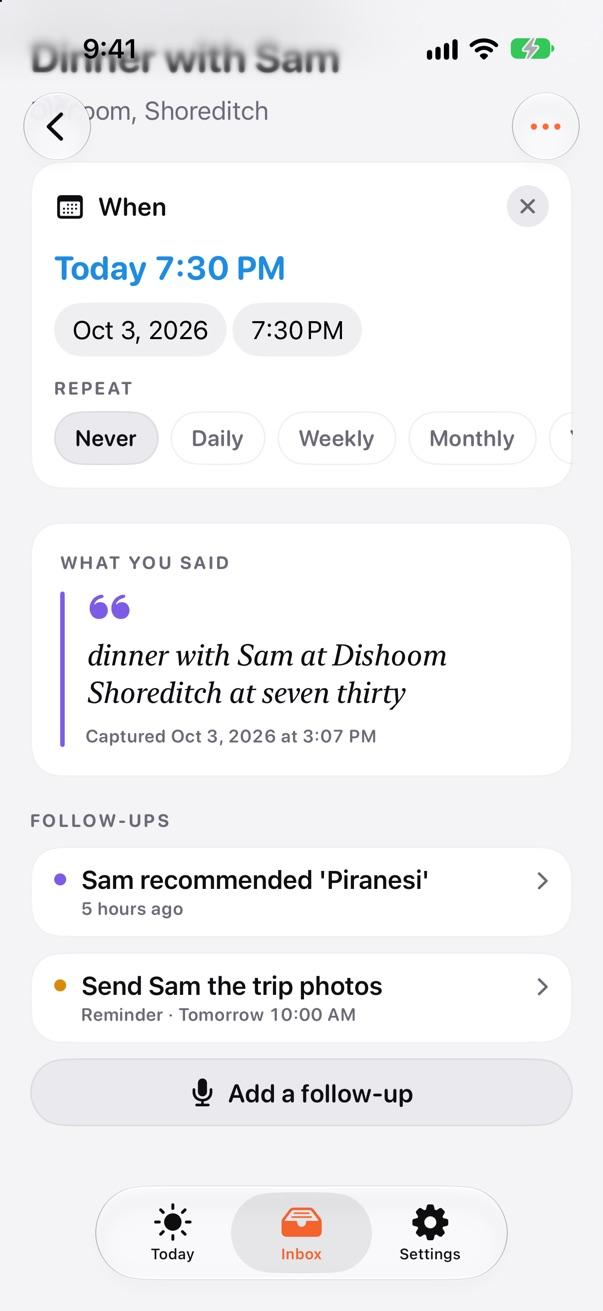
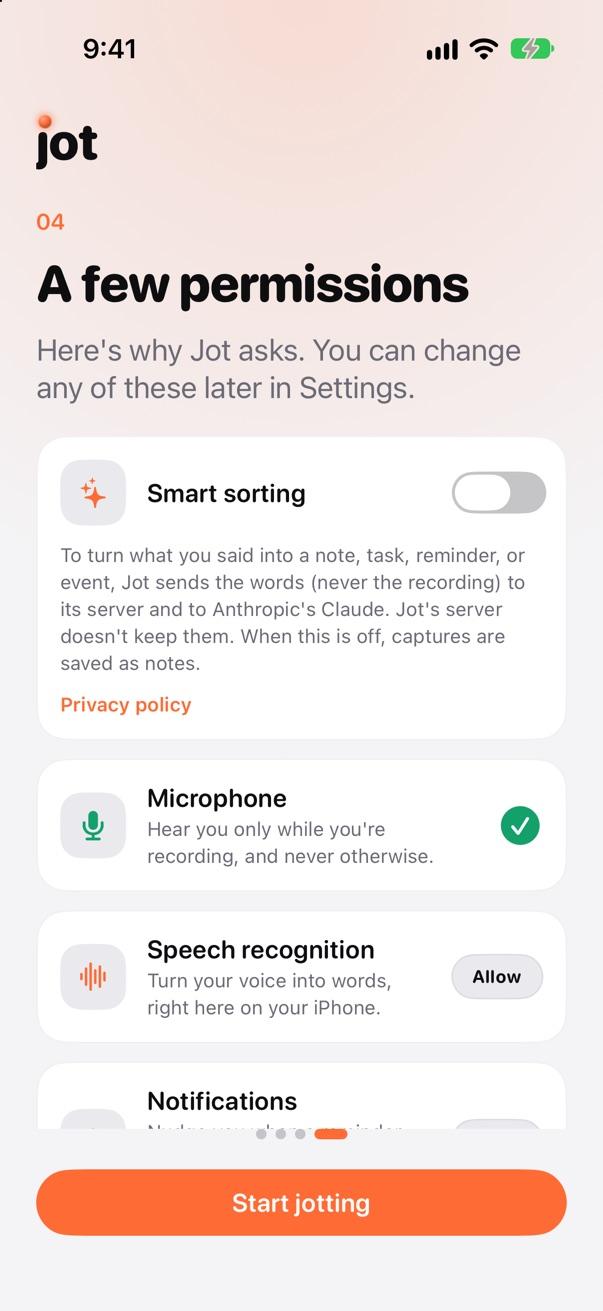
The software half of Jot works end to end, with the phone's own microphone standing in for the device: hold the orb, speak, release. The words are transcribed on the phone, Apple's on-device model sorts them into a note, task, reminder or event, and the item drops into place on the day's timeline.
Design the seam before the hardware exists
Everything downstream reads a stream of audio chunks from one AudioSource protocol. The phone mic implements it today; the Bluetooth link from the device will implement the same one, so nothing else changes when the hardware arrives.
Never lose what was said
If sorting fails or is switched off, the words are kept as a note and sorted later. If transcription fails, the recording itself is kept and can be played back. Nothing the user said is thrown away.
Sort on the phone, compute dates in code
Apple's on-device model does the sorting, so nothing leaves the phone. It got weekday maths wrong in testing, so it only extracts what was said and the app works out the date, with tests. Claude stays an explicit choice in Settings that says what is sent.
A recording must always end
A phone call, Siri, pulling AirPods out or a cancelled touch can all stop the audio without a finger being lifted. A wall-clock watchdog ends every recording on time limits and interruptions, so the mic can never stay on by accident.
Where it stands
iPhone app
Reliability + privacy pass
Done
Prototype One
XIAO breadboard, BLE audio to app
Done
Architecture
JOT-HW-001
Done
Parts + pin map
Checked against datasheets
Done
Schematic
Final, senior-reviewed
Done
PCB + fab
Layout final; ordering after Raytac's check
Now
Firmware + BLE
Rev A, from Prototype One
Next
Case + V1
Case arrived; V1 waits for the boards
Next
Updated 6 Nov 2026
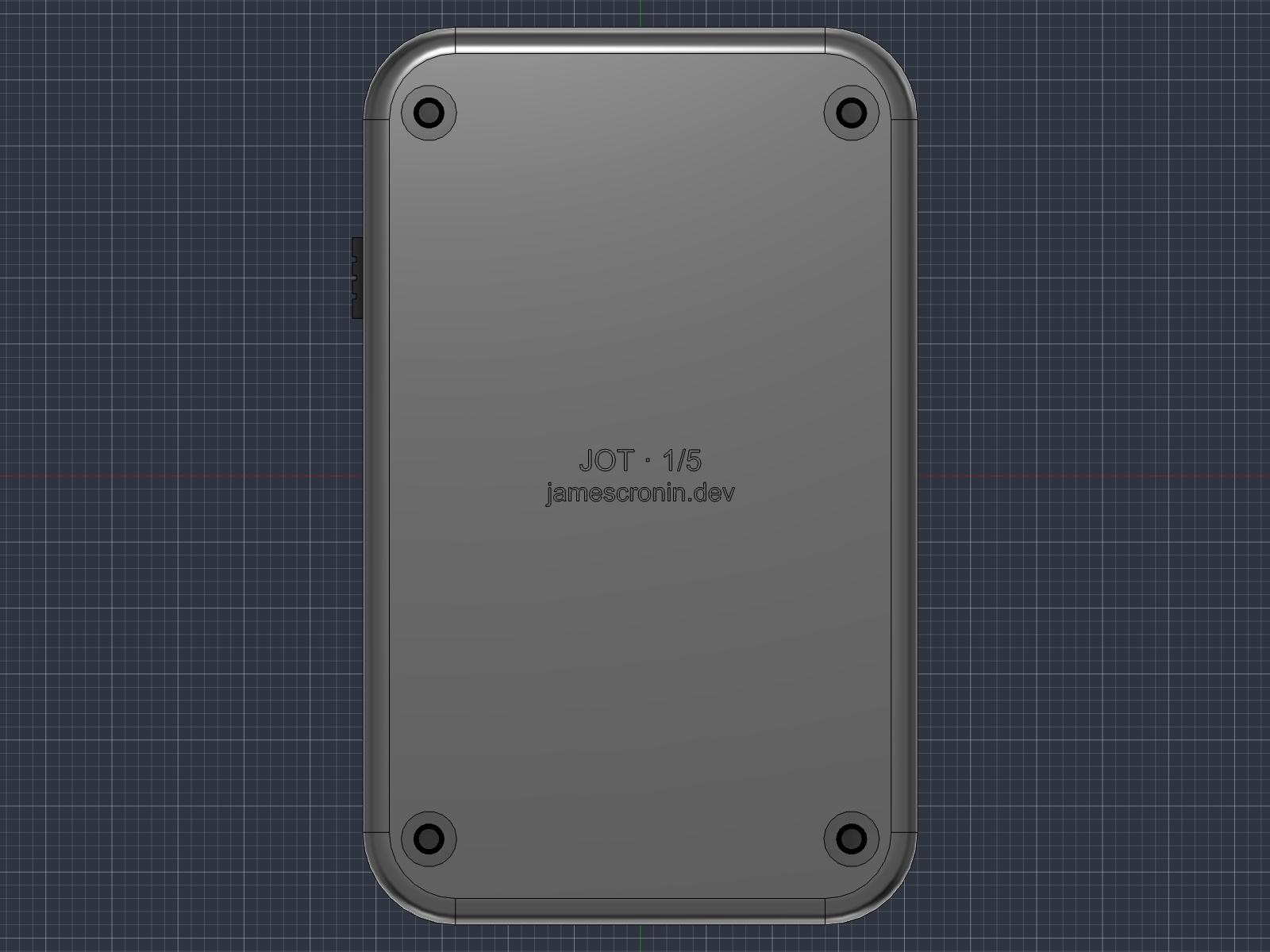
The case
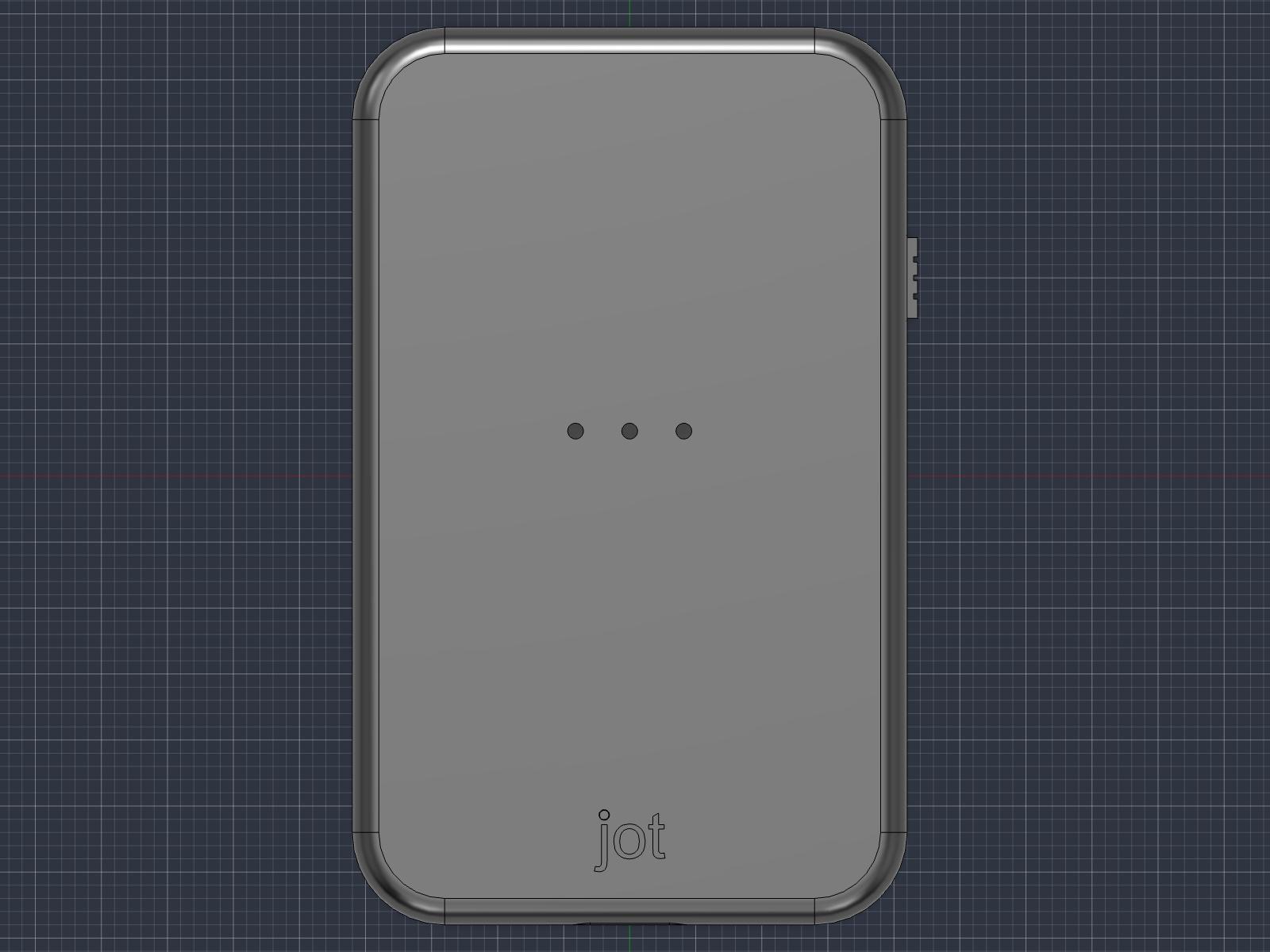
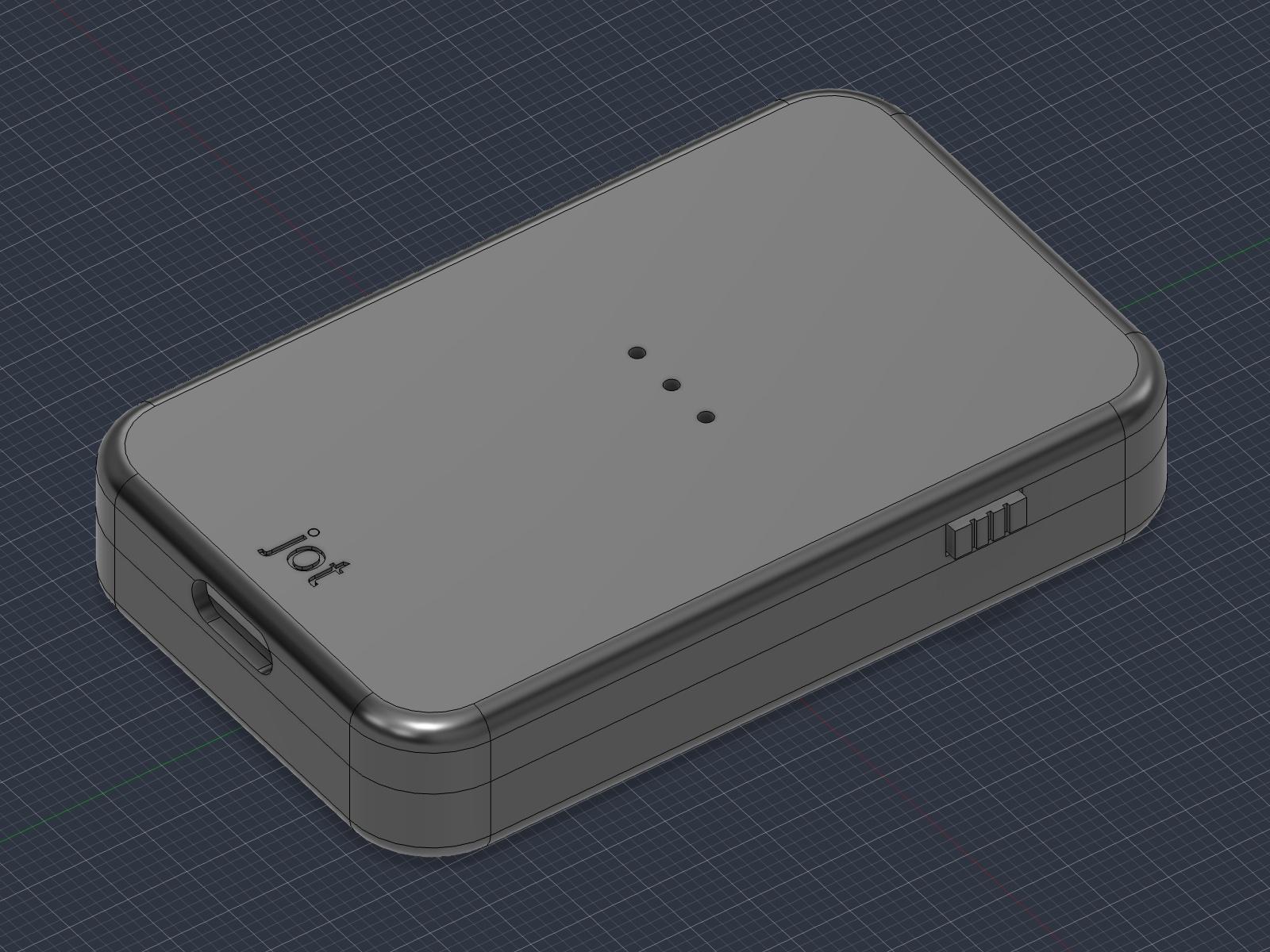
68 by 42 by 12.8 mm, two halves held by four screws from the back, which also clamp the board. A flatter battery took it from 16 mm down to 12.8. Five SLS nylon sets, numbered on the back, arrived in October and are waiting for the boards.
Build log
- Order files and a first quote
- Layout finished
- Routing the hard parts first
- Laying out the board
- A case for five
For engineers
Block diagram, requirements, power budget, bring-up plan, key parts and open items, on one page, with the schematic and BOM.
Read the Rev A notes